Many of the longest-reigning monarchs stayed mentally sharp well into old age.
As others lost focus and memory with age, royalty did not.
It wasn’t luck.
And it wasn’t genetics alone.
It came down to a simple habit.
Long before neuroscience had a name, royalty already understood something essential.
A Pattern Hidden in Plain Sight
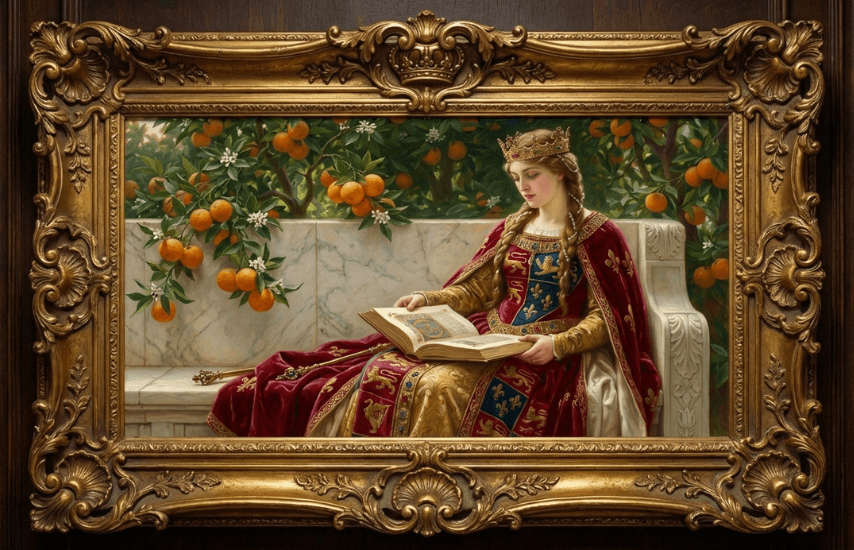
Look at the rulers who reigned the longest.
Queen Elizabeth II ruled for over 70 years.
Until the end of her life, she was known for her precise memory.
She recalled names, faces, meetings, and family histories.
Advisors often relied on her memory as much as their notes.
Emperor Franz Joseph I of Austria reigned for 68 years.
Every morning, well into old age, he reviewed state papers.
He revisited earlier rulings.
He corrected details from memory.
King Louis XIV ruled France for 72 years.
His body weakened late in life, but his mind did not fail in the same way.
His grasp of court history and past alliances remained clear.
The sharp memory that they all exhibited was not a coincidence.
A Habit That Protected the Mind
Monarchs lived safer lives, but safety alone does not preserve the mind.
What truly mattered was deliberate memory use.
Ruling required returning to the past.
Reviewing earlier decisions.
Comparing outcomes.
They were not reflecting randomly.
They were revisiting memory with purpose.
This constant mental engagement protected clarity.
And today, neuroscience confirms it.
The brain stays stronger when it regularly retrieves meaningful memories in sequence.
Not random facts.
But lived experiences.
When life loses structure, memory fades faster.
What Happens To Guided Memory

Guiding memory is the first step to restoring access.
People often notice the same progression.
In the first weeks, small memories return.
Names. Moments. Conversations.
Then connections form.
Events link together.
Then the story feels whole again.
Many people notice it with something unimportant at first.
A name they hadn’t thought about in years.
The layout of a room they suddenly can picture clearly.
It doesn’t feel dramatic.
It just feels like something quietly clicking back into place.
It’s not that memory disappears.
Access does.
And access improves when recall is structured and intentional.
The Modern Parallel

This is not just a historical insight.
It is the exact principle behind Memowrite.
Memowrite was deliberately designed to emulate the way monarchs revisited their past.
Instead of asking you to “write your life story,” it guides you through 50 carefully structured questions.
This isn’t journaling.
Journaling asks you to search.
Guided recall gives you something specific to return to.
Each question mirrors the royal habit of review.
Beginning with early life.
Moving through work, love, loss, and meaning.
Much like a ruler revisiting past decisions, looking back helps people remember what shaped their lives.
The process feels natural and effortless.
Most people don’t start intending to “write a book.”
They simply answer one question at a time, often speaking instead of writing.
You can try out their trial here:

And see if your memory responds better when guided.
Memory Was Never Meant to Be Random

History understood this.
Royalty depended on it.
You don’t need a crown to protect your memory.
You just need the right structure.
Sometimes, remembering isn’t about effort.
It’s about revisiting your life the way rulers once did –
deliberately, carefully, one question at a time.
And if any part of this feels familiar, you don’t need to believe the history.
You only need to answer one question…
and see what returns.
AS SEEN IN:

More and more people are turning their fondest memories about the people they love into beautiful books with Lovebook. It’s the easiest way to create something your loved one will cherish forever.
Join today and get 64% off – but only for a short time.
Spots are limited, and this offer won’t last. Tap below to begin your memoir and claim your 64% discount now!
Don’t wait! Only 21 spots left at this special price.
Real Reviews From Real Customers
Writing a book about us felt easier than I ever imagined
Margaret D.
I always assumed writing a book (especially about my husband) would be overwhelming. But in the end, choosing the cover photo was the hardest part. Before I knew it, I was holding a real book in my hands, filled with memories I hadn’t revisited in years.
Nothing compares to a story from the heart
Peter H.
Of all the gifts I’ve given over the years, none has meant as much as writing this for my granddaughter. Putting my hopes for her into a book felt bigger than any present I could buy. It’s something she can hold onto after birthdays are over.
The best birthday gift I’ve ever given
Linda F.
I thought that it might be a little too weird – it felt a little unusual. But my friend absolutely loved it! Tears, laughter, everything. If you're still unsure whether you should write a book about someone, do it. It's all worth it in the end.
Surprisingly fun
George M.
I thought this would feel like homework, but it turned into one of the most enjoyable things I’ve done lately. I ended up writing stories about my mom that I hadn’t revisited in years.
It made our relationship stronger
Evelyn R.️
Writing about our love story made me remember how much I truly love him. The final book is beautiful and I’m proud of what I created.